If It's Not Easy, It's Not Maintainable
True home organization isn’t about perfection, it’s about creating systems that are easy to maintain. Learn how simple, functional setups can help your home stay organized, support your daily routines, and make reset days effortless.
Amy Cobb
1/15/20263 min read
If It’s Not Easy,
It’s Not Maintainable.
There’s a common misconception when it comes to organizing that the best systems are the most detailed, the most aesthetic, or the most “Pinterest-worthy.”
But the truth is much simpler: if a system isn’t easy, it won’t last.
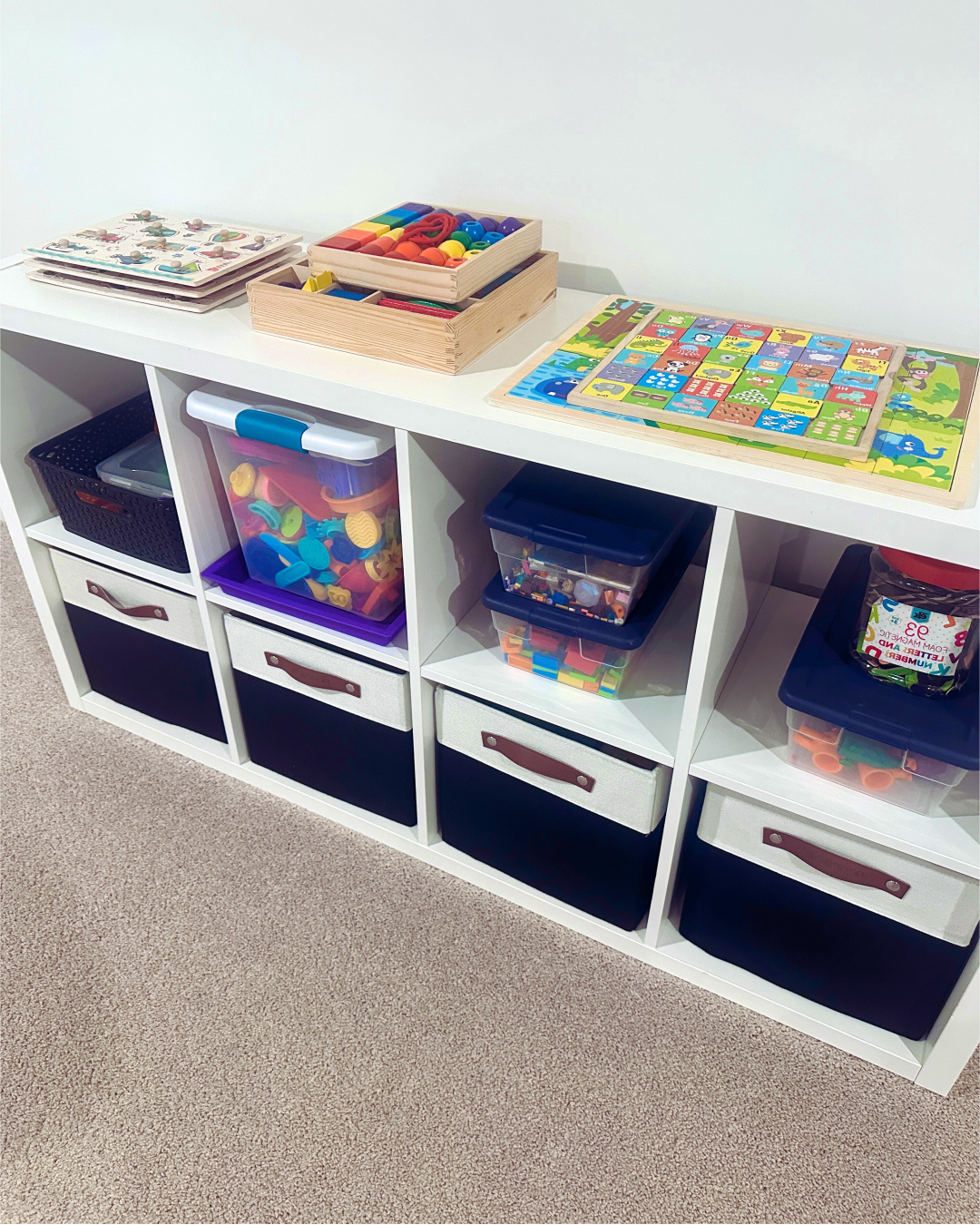
I was recently working with a client on what will be a multi-phase organizing project, and the first space we tackled was the playroom. As with most clients, whenever possible I prefer to start with a full sort and decluttering session. This allows me to truly see what they have and how the space is being used before recommending the purchase of any new storage solutions.
The Myth of the Perfect System
We’ve all been there — spending a weekend labeling bins, decanting everything into matching containers, and creating a setup that looks incredible on day one.
And then life happens.
Schedules fill up. Energy runs low. Between work, family, errands, and everything else competing for your attention, even the smallest tasks can start to feel heavy. Putting things back becomes one more thing on the list, and slowly, the system begins to fall apart. That doesn’t mean you failed. It means the system was asking too much of you.
A maintainable home doesn’t depend on motivation or discipline. It relies on ease.
Easy looks like:
everything has a place
Systems that work even when you’re rushed
Drop zones where items naturally land
Enough empty space to allow for growth
Homes that support real routines, not ideal ones
When putting something away takes only a second, it actually gets done.
Real Life Over Rules
Now, don’t confuse this with the idea that your home is going to be organized all the time. As a wife and mom of two littles, I can assure you, that is not the case. Real life is messy, loud, and constantly moving.
The difference is this: the systems you create should be what allow you to easily reset when things fall apart. And they're going to fall apart.
That means:
Messes are expected, not avoided
Putting things away is quick and intuitive
Systems still function on busy, exhausting days
Organization supports your life instead of competing with it
Because a livable home isn’t one that stays perfect—it’s one that’s easy to bring back together.
Start Small. Make It Easy.
If you’re feeling overwhelmed, don’t aim for a full overhaul. Start with one space and ask yourself one question:
“How can I make this easier to maintain?”
Maybe it means removing a step, or letting go of an unrealistic expectation. Maybe it’s choosing function over looks or even calling in some support when you need it.
Once you make a change that works, you'll know, because you'll feel it. You will feel the ease every time you go to set down the mail, or your keys, or step into your closet.
Because Simple Is Sustainable
Organization isn’t about creating a picture-perfect home.
It’s about creating a home you can actually live in.
And if it’s not easy?
It’s not maintainable.
By the end of our first session, everything had been sorted and thoughtfully placed back into the space using the existing shelves, bins, and storage already available. Visually, the progress was clear. The room felt calmer, more organized, and more functional than when we started. When the client walked in, they were thrilled, both with the progress we had made and with the idea that we might be done. And while we had made meaningful progress, I found myself saying something I say often: “If it’s not easy, it’s not maintainable.”
Whenever there’s a visible change in a space, it’s easy to assume it’s going to stay that way. But if a system can’t hold up to the way you actually live and function in the space, maintaining it will always feel like a struggle. Especially in high-use areas like playrooms, organization has to support real life, not an ideal version of it. If putting things away requires too many steps, too much effort, or constant resetting, the system will eventually fall apart.
Follow Us!
Contact Us
Interested In Learning More?
connect@minimalmeans.com
610.216.4760
© 2025. All rights reserved.
For inspiring space transformations, orderly insights, and the do's & don'ts of organizing. ✨